

Architecture
Enterprise Commerce is designed with a flexible and modular architecture that ensures a seamless and efficient experience for both store owners and customers. The key to this architecture is maintaining a single source of truth for data retrieval, allowing businesses to provide a consistent shopping experience.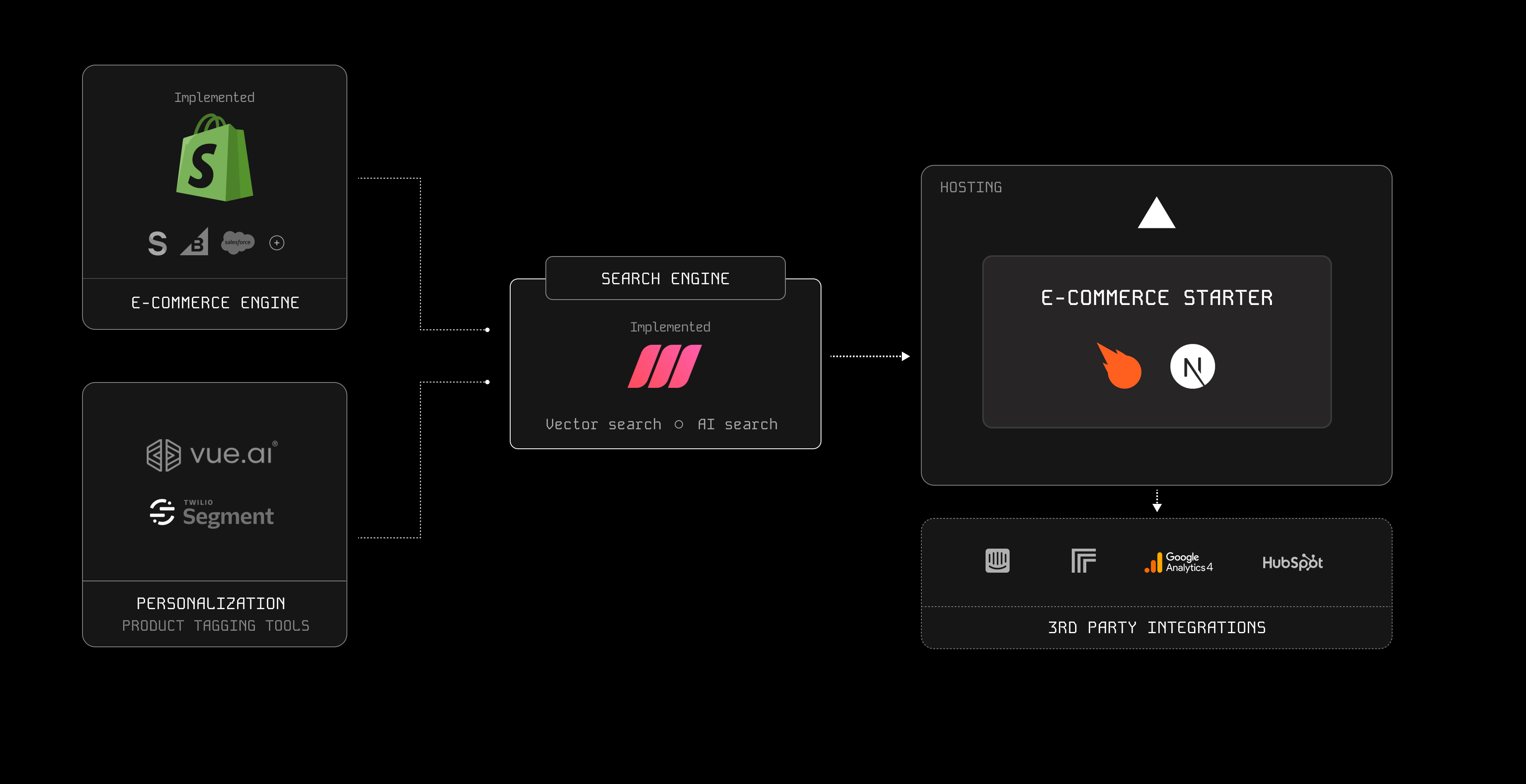
- Single Source of Truth for Data Retrieval: The storefront retrieves all its data from the search platform. This approach leverages the capabilities of search and merchandising. Ensuring that data displayed to customers is always optimized for searching, filtering, and additional merchandising functionalities like Frequently Bought Together, Top Rated or Bestsellers.
- Data Mutations Managed by the Commerce Platform: While data retrieval is centralized through the search platform, data mutations — such as interactions with the cart or building the checkout are managed directly through the commerce platform (e.g. Shopify).
- Synchronization Between Systems: To keep data consistent across platforms, synchronization is handled through mechanisms like webhooks (e.g. Shopify webhooks). This can be replaced with other architectures depending on the specifics of your business.